

6.4: Gramática- Los verbos reflexivos
- Page ID
- 325772

\( \newcommand{\vecs}[1]{\overset { \scriptstyle \rightharpoonup} {\mathbf{#1}} } \)
\( \newcommand{\vecd}[1]{\overset{-\!-\!\rightharpoonup}{\vphantom{a}\smash {#1}}} \)
\( \newcommand{\dsum}{\displaystyle\sum\limits} \)
\( \newcommand{\dint}{\displaystyle\int\limits} \)
\( \newcommand{\dlim}{\displaystyle\lim\limits} \)
\( \newcommand{\id}{\mathrm{id}}\) \( \newcommand{\Span}{\mathrm{span}}\)
( \newcommand{\kernel}{\mathrm{null}\,}\) \( \newcommand{\range}{\mathrm{range}\,}\)
\( \newcommand{\RealPart}{\mathrm{Re}}\) \( \newcommand{\ImaginaryPart}{\mathrm{Im}}\)
\( \newcommand{\Argument}{\mathrm{Arg}}\) \( \newcommand{\norm}[1]{\| #1 \|}\)
\( \newcommand{\inner}[2]{\langle #1, #2 \rangle}\)
\( \newcommand{\Span}{\mathrm{span}}\)
\( \newcommand{\id}{\mathrm{id}}\)
\( \newcommand{\Span}{\mathrm{span}}\)
\( \newcommand{\kernel}{\mathrm{null}\,}\)
\( \newcommand{\range}{\mathrm{range}\,}\)
\( \newcommand{\RealPart}{\mathrm{Re}}\)
\( \newcommand{\ImaginaryPart}{\mathrm{Im}}\)
\( \newcommand{\Argument}{\mathrm{Arg}}\)
\( \newcommand{\norm}[1]{\| #1 \|}\)
\( \newcommand{\inner}[2]{\langle #1, #2 \rangle}\)
\( \newcommand{\Span}{\mathrm{span}}\) \( \newcommand{\AA}{\unicode[.8,0]{x212B}}\)
\( \newcommand{\vectorA}[1]{\vec{#1}} % arrow\)
\( \newcommand{\vectorAt}[1]{\vec{\text{#1}}} % arrow\)
\( \newcommand{\vectorB}[1]{\overset { \scriptstyle \rightharpoonup} {\mathbf{#1}} } \)
\( \newcommand{\vectorC}[1]{\textbf{#1}} \)
\( \newcommand{\vectorD}[1]{\overrightarrow{#1}} \)
\( \newcommand{\vectorDt}[1]{\overrightarrow{\text{#1}}} \)
\( \newcommand{\vectE}[1]{\overset{-\!-\!\rightharpoonup}{\vphantom{a}\smash{\mathbf {#1}}}} \)
\( \newcommand{\vecs}[1]{\overset { \scriptstyle \rightharpoonup} {\mathbf{#1}} } \)
\(\newcommand{\longvect}{\overrightarrow}\)
\( \newcommand{\vecd}[1]{\overset{-\!-\!\rightharpoonup}{\vphantom{a}\smash {#1}}} \)
\(\newcommand{\ket}[1]{\left| #1 \right>}\)
\(\newcommand{\bra}[1]{\left< #1 \right|}\)
\(\newcommand{\braket}[2]{\left< #1 \vphantom{#2} \right| \left. #2 \vphantom{#1} \right>}\)
\(\newcommand{\braopket}[3]{\left< #1 \vphantom{#2}\vphantom{#3} \right| #2 \vphantom{#1}\vphantom{#3} \left| #3 \vphantom{#1}\vphantom{#2} \right>}\)
\(\newcommand{\qmvec}[1]{\mathbf{\vec{#1}}}\)
\(\newcommand{\op}[1]{\hat{\mathbf{#1}}}\)
\(\newcommand{\expect}[1]{\langle #1 \rangle}\)
\(\newcommand{\dfn}[1]{\emph{\textbf{#1}}}\)
Objetivos
- Recognize reflexive verbs that refer a daily routine or habitual actions
- Use the correct reflexive pronouns
 Reflexive verbs are special in Spanish because they signal actions that are done by the subject to him/her/themself. In other words the subject and the object of the sentence is doing and receiving the action at the same time. You can recognize reflexive verbs by the “se” attached to the infinitive.
Verbos reflexivos

 despertarse (wake up)
 levantarse (get up)
arreglarse (to get ready/ready oneself)
 bañarse
 ducharse
 lavarse
 limpiarse
 cepillarse los dientes
 cepillarse el pelo
 peinarse
 afeitarse
 vestirse (to get dressed), ponerse (to put on), probarse (to try on)
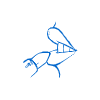 maquillarse
Otros verbos reflexivos
 acostarse (lie down), relajarse (to relax)
 caerse (to fall down)
 cansarse (to get tired)
 irse (to go away, to leave)
 lastimarse (to hurt oneself)
 olvidarse (to forget)
 quitarse (to remove, take away)
 sentarse
The following are some more common reflexive verbs and their non-reflexive equivalents:
| Forma reflexiva | Forma no reflexiva |
| afeitarse (to shave oneself) |
afeitar (to shave someone or something) |
| arreglarse (to get ready/ready oneself) |
arreglar (to arrange someone or something) |
| caerse (to fall down) |
caer (to fall, go down) |
| cansarse (to get tired) | cansar (to tire out) |
| cepillarse (to brush oneself) | cepillar (to brush someone or something) |
| ducharse (to shower oneself/take a shower) |
duchar (to shower/give someone a shower) |
| irse (to go away, to leave) |
ir (to go) |
| lastimarse (to hurt oneself) |
lastimar (to hurt someone or something) |
| lavarse (to wash oneself) |
lavar (to wash someone or something) |
| levantarse (to get up) |
levantar (to lift someone or something) |
| llamarse (to be called, named) |
llamar (to call someone or something) |
| maquillarse (to put make-up on oneself) |
maquillar (to put make-up on someone else) |
| ponerse (to put on) |
poner (to put) |
| probarse (to try on) |
probar (to try, to taste) |
| quemarse (to burn oneself) |
quemar (to burn someone or something) |
| quitarse (to take off, e.g. clothing) |
quitar (to take away from someone or something) |
| relajarse (to relax oneself) |
relajar (to relax someone or something) |
Note that the meaning changes when the verb is reflexive or not.
¿Cómo se conjugan los verbos reflexivos?
To conjugate reflexive verbs, reflexive pronouns are used that match the verb ending; as usual in Spanish, you may specify the subject pronoun, especially for clarification, but subject pronouns may be left out of these sentences because the reflexive pronoun and verb ending should be clarification enough.
You probably noticed in the vocabulary list above that all reflexive infinitives end with the pronoun “se”. This ending is a reflexive pronoun, and is placed *before* a conjugated verb. This indicates that the subject of the sentence is doing the action to him/herself. The ending of the verb matches the subject (and the reflexive pronoun) according to the tense, and in this case we are still in the present tense. See the table that follows:
| Subject Pronoun | Reflexive Pronoun | bañarse |
vestirse | cepillarse |
dormirse |
| yo | me | me baño |
me visto |
me cepillo |
me duermo |
| tú | te | te bañas |
te vistes |
te cepillas |
te duermes |
| él, ella, usted | se | se baña |
se viste |
se cepilla |
se duerme |
| nosotros, nosotras | nos | nos bañamos |
nos vestimos |
nos cepillamos |
nos dormimos |
| vosotros, vosotras | os | os bañáis |
os vestís |
os cepilláis |
os dormís |
| ellos, ellas, ustedes | se | se bañan |
se visten |
se cepillan |
se duermen |
¡OJO! The reflexive pronoun “nos” and the subject pronoun “nosotros” are two different words, with different functions. Never think that “nos” is an abbreviation of “nosotros”!
To recap, in reflexive verbs the subject is acting on itself: this is the most common use of the reflexive, though there are others. Essentially reflexives are verbs where the subject and object are the same. Here’s a summary table with the reflexive pronouns:
| Singular | Plural | |
| 1a persona | me (myself) | nos (ourselves) |
| 2a persona | te (yourself – informal) | os (yourself – formal) |
| 3a persona | se (himself, herself, itself) | se (themselves) |
Why is this so complicated for English speakers? Because there is no exact translation of the reflexive verbs into English. The reflexive usage is often translated in a non-reflexive way, as you have seen since the start of this course: “Ella se llama Carmen” literally translates to “She calls herself Carmen”, but it is translated into English as “Her name is Carmen.”
Pronoun placement
To make the reflexive form complete you must add the appropriate reflexive pronoun and put it in the appropriate place. When the reflexive verb is conjugated, the reflexive pronoun must agree with the subject and it must precede the conjugated verb.
sujeto + pronombre + verbo conjugado
- Ella se levanta temprano. (She gets up early.)
As pointed out above, the reflexive pronoun must precede a conjugated verb. However, when the infinitive follows a conjugated verb or is part of a construct the reflexive pronoun may go either in front of the conjugated verb or attached to the infinitive at the end of the construct.
sujeto + pronombre + verbo conjugado + verbo infinitivo
- Ella se tiene que levantar temprano. (She has to get up early.)
sujeto + verbo conjugado + verbo infinitivo+pronombre
- Ella tiene que levantarse temprano. (She has to get up early.)
Similarly, in the present progressive the reflexive pronoun may go either in front of the conjugated verb “estar”, or attached to the gerund. When attaching to the end of the gerund care must be taken to ensure that any required written accents are added.
sujeto + pronombre + verbo conjugado + verbo gerundio
- Ella se está levantando temprano. (She is getting up early.)
sujeto + verbo conjugado + verbo gerundio+pronombre
- Ella está levantándose temprano. (She is getting up early.)
Contribute!
- Gramu00e1tica: Los verbos reflexivos. Authored by: SUNY Oneonta with Lumen Learning. License: CC BY: Attribution
- Quu00e9 te motiva.... Authored by: Rachel Zaccaro. License: CC BY: Attribution