

3: Introduction
- Page ID
- 343344
\( \newcommand{\vecs}[1]{\overset { \scriptstyle \rightharpoonup} {\mathbf{#1}} } \)
\( \newcommand{\vecd}[1]{\overset{-\!-\!\rightharpoonup}{\vphantom{a}\smash {#1}}} \)
\( \newcommand{\dsum}{\displaystyle\sum\limits} \)
\( \newcommand{\dint}{\displaystyle\int\limits} \)
\( \newcommand{\dlim}{\displaystyle\lim\limits} \)
\( \newcommand{\id}{\mathrm{id}}\) \( \newcommand{\Span}{\mathrm{span}}\)
( \newcommand{\kernel}{\mathrm{null}\,}\) \( \newcommand{\range}{\mathrm{range}\,}\)
\( \newcommand{\RealPart}{\mathrm{Re}}\) \( \newcommand{\ImaginaryPart}{\mathrm{Im}}\)
\( \newcommand{\Argument}{\mathrm{Arg}}\) \( \newcommand{\norm}[1]{\| #1 \|}\)
\( \newcommand{\inner}[2]{\langle #1, #2 \rangle}\)
\( \newcommand{\Span}{\mathrm{span}}\)
\( \newcommand{\id}{\mathrm{id}}\)
\( \newcommand{\Span}{\mathrm{span}}\)
\( \newcommand{\kernel}{\mathrm{null}\,}\)
\( \newcommand{\range}{\mathrm{range}\,}\)
\( \newcommand{\RealPart}{\mathrm{Re}}\)
\( \newcommand{\ImaginaryPart}{\mathrm{Im}}\)
\( \newcommand{\Argument}{\mathrm{Arg}}\)
\( \newcommand{\norm}[1]{\| #1 \|}\)
\( \newcommand{\inner}[2]{\langle #1, #2 \rangle}\)
\( \newcommand{\Span}{\mathrm{span}}\) \( \newcommand{\AA}{\unicode[.8,0]{x212B}}\)
\( \newcommand{\vectorA}[1]{\vec{#1}} % arrow\)
\( \newcommand{\vectorAt}[1]{\vec{\text{#1}}} % arrow\)
\( \newcommand{\vectorB}[1]{\overset { \scriptstyle \rightharpoonup} {\mathbf{#1}} } \)
\( \newcommand{\vectorC}[1]{\textbf{#1}} \)
\( \newcommand{\vectorD}[1]{\overrightarrow{#1}} \)
\( \newcommand{\vectorDt}[1]{\overrightarrow{\text{#1}}} \)
\( \newcommand{\vectE}[1]{\overset{-\!-\!\rightharpoonup}{\vphantom{a}\smash{\mathbf {#1}}}} \)
\( \newcommand{\vecs}[1]{\overset { \scriptstyle \rightharpoonup} {\mathbf{#1}} } \)
\(\newcommand{\longvect}{\overrightarrow}\)
\( \newcommand{\vecd}[1]{\overset{-\!-\!\rightharpoonup}{\vphantom{a}\smash {#1}}} \)
\(\newcommand{\ket}[1]{\left| #1 \right>}\)
\(\newcommand{\bra}[1]{\left< #1 \right|}\)
\(\newcommand{\braket}[2]{\left< #1 \vphantom{#2} \right| \left. #2 \vphantom{#1} \right>}\)
\(\newcommand{\braopket}[3]{\left< #1 \vphantom{#2}\vphantom{#3} \right| #2 \vphantom{#1}\vphantom{#3} \left| #3 \vphantom{#1}\vphantom{#2} \right>}\)
\(\newcommand{\qmvec}[1]{\mathbf{\vec{#1}}}\)
\(\newcommand{\op}[1]{\hat{\mathbf{#1}}}\)
\(\newcommand{\expect}[1]{\langle #1 \rangle}\)
\(\newcommand{\dfn}[1]{\emph{\textbf{#1}}}\)
Introduction
Photography as Memory, Magic, and Method
Since its inception, photography has straddled the line between science and sorcery, memory and material, documentation and dream. More than a mechanical process, it is a cultural phenomenon—a technology that changed the way we remember, perceive, and construct reality. To understand photography is not only to grasp how it functions as a tool but to reckon with the deeper ways it shapes human experience. Photography is memory, magic, and method.
Photography as Memory
At its core, photography is a system of remembering. A photograph holds time in suspension, preserving a visual trace of a person, place, or moment long after it has passed. It is an act of witnessing—a way to document the fleeting. Whether printed in an album, saved in a shoebox, or stored on a cloud server, photographs become memory keepers. They allow us to revisit moments both mundane and monumental: a child’s birthday party, a family reunion, a protest in the streets, or a lover’s smile.
Roland Barthes called this quality the "that-has-been" of the photograph, the strange tension between presence and absence. The subject of a photograph is there, yet not there. We are reminded of their life and their passing. Photographs function as emotional archives. They testify to our existence, validate our experiences, and often outlast the memories themselves.
Yet memory in photography is selective. The frame includes and excludes. The shutter freezes one instant but not the next. In this way, photography is not a passive recorder of reality but an active shaper of what gets remembered—and what does not.
Photography as Magic
To the earliest viewers of daguerreotypes in the 19th century, photography was nothing short of magical. Here was a new form of image-making that didn’t rely on paint or pencil but rather on light itself. As Louis Daguerre famously declared, “I have seized the light—I have arrested its flight!” The camera seemed to capture the invisible and make it visible. It turned time into artifact.
This magical aura has not entirely faded. We still experience moments of wonder when a photograph reveals something unexpected—an emotion we didn’t know we felt, a gesture we missed in the moment, a strange symmetry in the background. Photography continues to function as a kind of visual alchemy, transforming the ordinary into something worthy of notice.
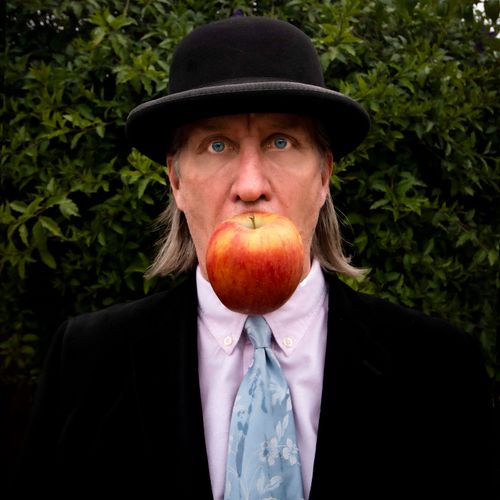
Artists have long leaned into this magical potential. From the surrealist manipulations of Man Ray to the staged fictions of Cindy Sherman, photographers have used the medium to play with illusion, disguise, fantasy, and desire. The camera becomes not only a witness but a conjurer—summoning new worlds, reshaping identities, and challenging what we believe to be true.
Photography as Method
Alongside its emotional and imaginative dimensions, photography is also a method—a structured process of image-making that blends optics, chemistry (or digital technology), composition, and timing. To make a photograph is to make a series of choices: where to point the lens, what to include in the frame, when to release the shutter, how to shape the light.
Photography as method is about learning how to see. It requires technical knowledge—of exposure, aperture, ISO, and shutter speed—but also an attunement to space, light, and meaning. It trains the eye to notice the unnoticed and to compose the world with intention.
This methodical side of photography does not diminish its expressive power. On the contrary, understanding photography as a system of decisions allows practitioners to take control of their narratives. It empowers them to use the camera not just to record, but to communicate, to question, and to create.
In classrooms, studios, and streets around the world, photography is taught and practiced as both an art and a discipline. It is an invitation to experiment, to investigate, to reflect. It is a method that makes visible the invisible—from the intricacies of a plant leaf under a macro lens to the quiet resilience of a portrait subject.
Conclusion
Photography is more than a tool; it is a way of seeing, feeling, and knowing. It operates at the intersection of memory, magic, and method—preserving the past, enchanting the present, and offering us ways to shape the future. Whether found in a family album, a gallery wall, a news report, or a smartphone scroll, photographs remain among the most powerful cultural objects we possess. They show us not only what the world looks like, but what it means to live in it.