

8.1: Overview
- Page ID
- 387847

\( \newcommand{\vecs}[1]{\overset { \scriptstyle \rightharpoonup} {\mathbf{#1}} } \)
\( \newcommand{\vecd}[1]{\overset{-\!-\!\rightharpoonup}{\vphantom{a}\smash {#1}}} \)
\( \newcommand{\dsum}{\displaystyle\sum\limits} \)
\( \newcommand{\dint}{\displaystyle\int\limits} \)
\( \newcommand{\dlim}{\displaystyle\lim\limits} \)
\( \newcommand{\id}{\mathrm{id}}\) \( \newcommand{\Span}{\mathrm{span}}\)
( \newcommand{\kernel}{\mathrm{null}\,}\) \( \newcommand{\range}{\mathrm{range}\,}\)
\( \newcommand{\RealPart}{\mathrm{Re}}\) \( \newcommand{\ImaginaryPart}{\mathrm{Im}}\)
\( \newcommand{\Argument}{\mathrm{Arg}}\) \( \newcommand{\norm}[1]{\| #1 \|}\)
\( \newcommand{\inner}[2]{\langle #1, #2 \rangle}\)
\( \newcommand{\Span}{\mathrm{span}}\)
\( \newcommand{\id}{\mathrm{id}}\)
\( \newcommand{\Span}{\mathrm{span}}\)
\( \newcommand{\kernel}{\mathrm{null}\,}\)
\( \newcommand{\range}{\mathrm{range}\,}\)
\( \newcommand{\RealPart}{\mathrm{Re}}\)
\( \newcommand{\ImaginaryPart}{\mathrm{Im}}\)
\( \newcommand{\Argument}{\mathrm{Arg}}\)
\( \newcommand{\norm}[1]{\| #1 \|}\)
\( \newcommand{\inner}[2]{\langle #1, #2 \rangle}\)
\( \newcommand{\Span}{\mathrm{span}}\) \( \newcommand{\AA}{\unicode[.8,0]{x212B}}\)
\( \newcommand{\vectorA}[1]{\vec{#1}} % arrow\)
\( \newcommand{\vectorAt}[1]{\vec{\text{#1}}} % arrow\)
\( \newcommand{\vectorB}[1]{\overset { \scriptstyle \rightharpoonup} {\mathbf{#1}} } \)
\( \newcommand{\vectorC}[1]{\textbf{#1}} \)
\( \newcommand{\vectorD}[1]{\overrightarrow{#1}} \)
\( \newcommand{\vectorDt}[1]{\overrightarrow{\text{#1}}} \)
\( \newcommand{\vectE}[1]{\overset{-\!-\!\rightharpoonup}{\vphantom{a}\smash{\mathbf {#1}}}} \)
\( \newcommand{\vecs}[1]{\overset { \scriptstyle \rightharpoonup} {\mathbf{#1}} } \)
\(\newcommand{\longvect}{\overrightarrow}\)
\( \newcommand{\vecd}[1]{\overset{-\!-\!\rightharpoonup}{\vphantom{a}\smash {#1}}} \)
\(\newcommand{\ket}[1]{\left| #1 \right>}\)
\(\newcommand{\bra}[1]{\left< #1 \right|}\)
\(\newcommand{\braket}[2]{\left< #1 \vphantom{#2} \right| \left. #2 \vphantom{#1} \right>}\)
\(\newcommand{\braopket}[3]{\left< #1 \vphantom{#2}\vphantom{#3} \right| #2 \vphantom{#1}\vphantom{#3} \left| #3 \vphantom{#1}\vphantom{#2} \right>}\)
\(\newcommand{\qmvec}[1]{\mathbf{\vec{#1}}}\)
\(\newcommand{\op}[1]{\hat{\mathbf{#1}}}\)
\(\newcommand{\expect}[1]{\langle #1 \rangle}\)
\(\newcommand{\dfn}[1]{\emph{\textbf{#1}}}\)
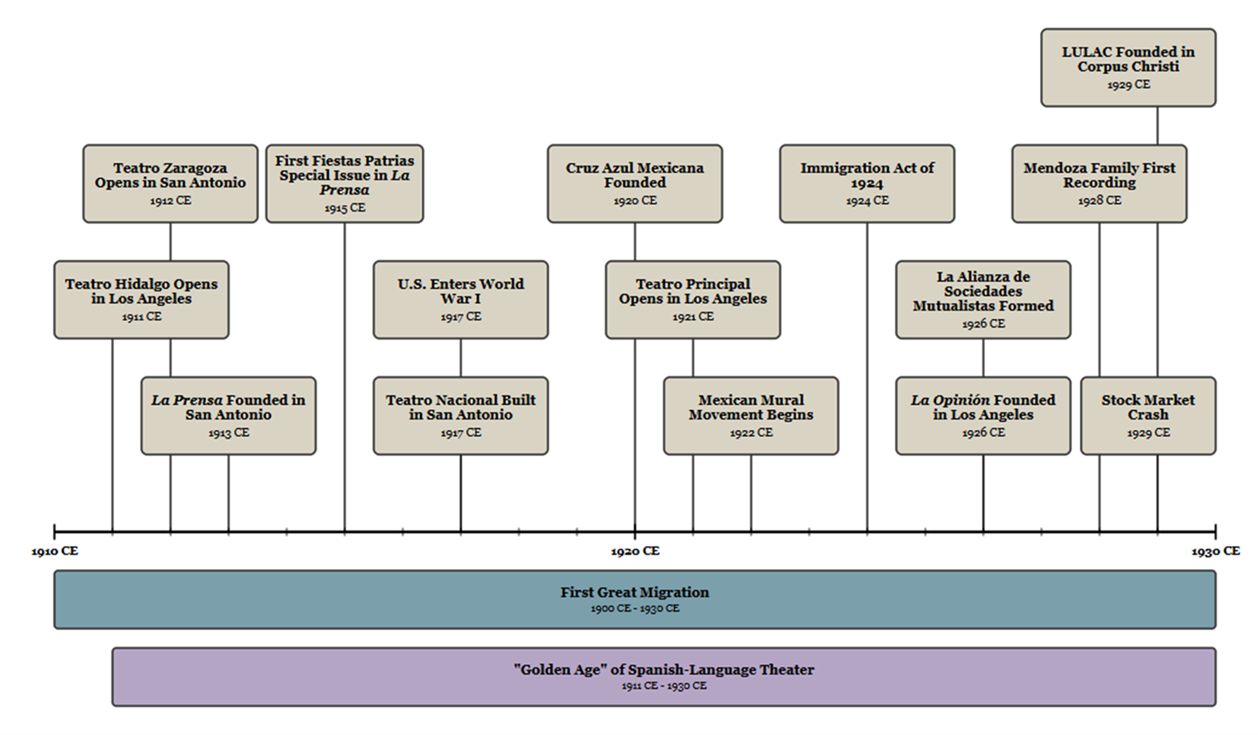
Figure 8.1 Building Community, 1900–1930 (Author Created, 2025)
The development of barrio institutions including Spanish-language theaters, newspapers, mutualistas, and civil rights organizations during the First Great Migration era.
The transition from temporary work camps to permanent settlements transformed the physical and social landscape of Mexican American life, creating barrios that served as vital cultural territories. These neighborhoods were anchored by small businesses that often went unrecorded in official city directories but formed the essential economic and social backbone of the community. A walk through the streets would reveal a network of specialized commerce where Spanish was the primary language and traditional practices were preserved. The tienda stocked ingredients like dried chiles and masa harina that made a family’s recipes taste right, while the panadería down the street sold pan dulce to customers who exchanged news with neighbors as they waited. Even the barbershop functioned as an informal community center where men discussed jobs, politics, and the conditions back home in Mexico.
The barrios taking shape during this era were much more than residential areas defined by where people were allowed to live; they became centers of identity with their own leadership and distinct institutions. While Chapter 7 traced the process of these settlements becoming permanent, the following sections examine the institutions that gave these communities their specific character. We will explore the churches and businesses that structured daily life, the leadership networks that formed to navigate American institutions on community terms, and the press, theaters, and radio programming that built a Mexican American public life with its own voice. This organizational foundation ensured that even under the pressure of segregation, the community possessed the resources to maintain its heritage while advocating for its future.
By the end of this chapter, you will be able to:
- Explain how the physical and cultural characteristics of the barrio allowed Mexican American communities to maintain autonomy while navigating the constraints of segregation.
- Describe the evolution of mutualistas from informal support networks into formal institutions that provided both community insurance and political advocacy.
- Analyze the leadership roles and organizational opportunities created by women within community institutions despite the limitations of patriarchal structures.
- Evaluate how the professional Spanish-language press and community foodways serve as historical evidence of migration, cultural adaptation, and ethnic identity.