

12: Module 4- “College, Inc.”
- Page ID
- 359774

\( \newcommand{\vecs}[1]{\overset { \scriptstyle \rightharpoonup} {\mathbf{#1}} } \)
\( \newcommand{\vecd}[1]{\overset{-\!-\!\rightharpoonup}{\vphantom{a}\smash {#1}}} \)
\( \newcommand{\dsum}{\displaystyle\sum\limits} \)
\( \newcommand{\dint}{\displaystyle\int\limits} \)
\( \newcommand{\dlim}{\displaystyle\lim\limits} \)
\( \newcommand{\id}{\mathrm{id}}\) \( \newcommand{\Span}{\mathrm{span}}\)
( \newcommand{\kernel}{\mathrm{null}\,}\) \( \newcommand{\range}{\mathrm{range}\,}\)
\( \newcommand{\RealPart}{\mathrm{Re}}\) \( \newcommand{\ImaginaryPart}{\mathrm{Im}}\)
\( \newcommand{\Argument}{\mathrm{Arg}}\) \( \newcommand{\norm}[1]{\| #1 \|}\)
\( \newcommand{\inner}[2]{\langle #1, #2 \rangle}\)
\( \newcommand{\Span}{\mathrm{span}}\)
\( \newcommand{\id}{\mathrm{id}}\)
\( \newcommand{\Span}{\mathrm{span}}\)
\( \newcommand{\kernel}{\mathrm{null}\,}\)
\( \newcommand{\range}{\mathrm{range}\,}\)
\( \newcommand{\RealPart}{\mathrm{Re}}\)
\( \newcommand{\ImaginaryPart}{\mathrm{Im}}\)
\( \newcommand{\Argument}{\mathrm{Arg}}\)
\( \newcommand{\norm}[1]{\| #1 \|}\)
\( \newcommand{\inner}[2]{\langle #1, #2 \rangle}\)
\( \newcommand{\Span}{\mathrm{span}}\) \( \newcommand{\AA}{\unicode[.8,0]{x212B}}\)
\( \newcommand{\vectorA}[1]{\vec{#1}} % arrow\)
\( \newcommand{\vectorAt}[1]{\vec{\text{#1}}} % arrow\)
\( \newcommand{\vectorB}[1]{\overset { \scriptstyle \rightharpoonup} {\mathbf{#1}} } \)
\( \newcommand{\vectorC}[1]{\textbf{#1}} \)
\( \newcommand{\vectorD}[1]{\overrightarrow{#1}} \)
\( \newcommand{\vectorDt}[1]{\overrightarrow{\text{#1}}} \)
\( \newcommand{\vectE}[1]{\overset{-\!-\!\rightharpoonup}{\vphantom{a}\smash{\mathbf {#1}}}} \)
\( \newcommand{\vecs}[1]{\overset { \scriptstyle \rightharpoonup} {\mathbf{#1}} } \)
\(\newcommand{\longvect}{\overrightarrow}\)
\( \newcommand{\vecd}[1]{\overset{-\!-\!\rightharpoonup}{\vphantom{a}\smash {#1}}} \)
\(\newcommand{\ket}[1]{\left| #1 \right>}\)
\(\newcommand{\bra}[1]{\left< #1 \right|}\)
\(\newcommand{\braket}[2]{\left< #1 \vphantom{#2} \right| \left. #2 \vphantom{#1} \right>}\)
\(\newcommand{\braopket}[3]{\left< #1 \vphantom{#2}\vphantom{#3} \right| #2 \vphantom{#1}\vphantom{#3} \left| #3 \vphantom{#1}\vphantom{#2} \right>}\)
\(\newcommand{\qmvec}[1]{\mathbf{\vec{#1}}}\)
\(\newcommand{\op}[1]{\hat{\mathbf{#1}}}\)
\(\newcommand{\expect}[1]{\langle #1 \rangle}\)
\(\newcommand{\dfn}[1]{\emph{\textbf{#1}}}\)
MODULE 4: “College, Inc.”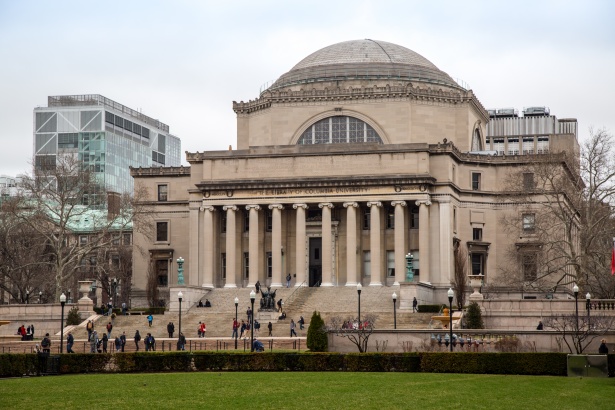
Module 4 is concerned with the various types of colleges and universities operating in the U.S. In the United States, higher education is offered through several types of colleges, including public universities, private non-profit colleges, community colleges, and for-profit institutions. Public universities are state-funded and often offer a wide range of academic programs at a lower cost for in-state residents. Private non-profit colleges are funded primarily through tuition, donations, and endowments, focusing on educational missions rather than generating profit. Community colleges provide two-year degrees and certificates, serving as affordable entry points to higher education or as pathways to four-year institutions. For-profit colleges, on the other hand, operate as businesses with the primary goal of generating revenue for owners and shareholders.
Developing Your Perspective
By exploring a range of viewpoints concerning the various types of colleges operating in the U.S., you will form and support your own opinions on the issue. The module will guide you in refining your thoughts and organizing your ideas effectively. Through your exploration, you will:
- Engage with diverse perspectives about public universities, private non-profit colleges, community colleges, and for-profit institutions.
- Reflect on the advantages, challenges, and unique characteristics of each type of college in order to develop a well-rounded viewpoint.
- Use module activities and guidance to structure your reasoning and present your ideas clearly.
Your work will culminate in a rough draft essay addressing the central question: What do you think? Are for-profit colleges a menace to education and a waste of money, or are they a valuable alternative to traditional, not-for-profit colleges and universities?
 Mechanics
Module 4 features additional weekly exercises and quizzes designed to strengthen your grasp of writing mechanics. Alongside these tasks, you'll also get valuable feedback to pinpoint ways you can improve, helping you develop solid skills for future writing assignments as you move through the module.
Personal Writing Handbook (PWH)
Module 4 marks the completion of the self-identification segment of our PWH project. Drawing upon the feedback provided on your previous essays and your own reflections on your work, you will select two additional areas or topics to investigate as you develop a concise chapter for personal reference throughout this and future semesters. Please note that generative A.I. tools will be utilized to assist in the creation of your PWH chapters.
- 12.1: Week 12
- The primary focus for this week will be on developing your analytical reading skills through assignments related to Module 4, based on the documentary “College, Inc.”
- 12.2: Capitalization
- In this activity, students will begin by reading instructional material that explains the essential rules and examples of capitalization in academic writing.
- 12.4: Reading and Discussion
- This page outlines guidelines for engaging with the "College, Inc." documentary, which critiques profit-driven colleges. Readers are urged to analyze the documentary's main arguments, responses to critics, and ethical issues. It emphasizes evaluating narrative techniques and the socio-political context of the film. It is recommended students use D2L's Discussion component to complete this assignment.