

8.2.3: Conversación
- Page ID
- 284486

\( \newcommand{\vecs}[1]{\overset { \scriptstyle \rightharpoonup} {\mathbf{#1}} } \)
\( \newcommand{\vecd}[1]{\overset{-\!-\!\rightharpoonup}{\vphantom{a}\smash {#1}}} \)
\( \newcommand{\dsum}{\displaystyle\sum\limits} \)
\( \newcommand{\dint}{\displaystyle\int\limits} \)
\( \newcommand{\dlim}{\displaystyle\lim\limits} \)
\( \newcommand{\id}{\mathrm{id}}\) \( \newcommand{\Span}{\mathrm{span}}\)
( \newcommand{\kernel}{\mathrm{null}\,}\) \( \newcommand{\range}{\mathrm{range}\,}\)
\( \newcommand{\RealPart}{\mathrm{Re}}\) \( \newcommand{\ImaginaryPart}{\mathrm{Im}}\)
\( \newcommand{\Argument}{\mathrm{Arg}}\) \( \newcommand{\norm}[1]{\| #1 \|}\)
\( \newcommand{\inner}[2]{\langle #1, #2 \rangle}\)
\( \newcommand{\Span}{\mathrm{span}}\)
\( \newcommand{\id}{\mathrm{id}}\)
\( \newcommand{\Span}{\mathrm{span}}\)
\( \newcommand{\kernel}{\mathrm{null}\,}\)
\( \newcommand{\range}{\mathrm{range}\,}\)
\( \newcommand{\RealPart}{\mathrm{Re}}\)
\( \newcommand{\ImaginaryPart}{\mathrm{Im}}\)
\( \newcommand{\Argument}{\mathrm{Arg}}\)
\( \newcommand{\norm}[1]{\| #1 \|}\)
\( \newcommand{\inner}[2]{\langle #1, #2 \rangle}\)
\( \newcommand{\Span}{\mathrm{span}}\) \( \newcommand{\AA}{\unicode[.8,0]{x212B}}\)
\( \newcommand{\vectorA}[1]{\vec{#1}} % arrow\)
\( \newcommand{\vectorAt}[1]{\vec{\text{#1}}} % arrow\)
\( \newcommand{\vectorB}[1]{\overset { \scriptstyle \rightharpoonup} {\mathbf{#1}} } \)
\( \newcommand{\vectorC}[1]{\textbf{#1}} \)
\( \newcommand{\vectorD}[1]{\overrightarrow{#1}} \)
\( \newcommand{\vectorDt}[1]{\overrightarrow{\text{#1}}} \)
\( \newcommand{\vectE}[1]{\overset{-\!-\!\rightharpoonup}{\vphantom{a}\smash{\mathbf {#1}}}} \)
\( \newcommand{\vecs}[1]{\overset { \scriptstyle \rightharpoonup} {\mathbf{#1}} } \)
\(\newcommand{\longvect}{\overrightarrow}\)
\( \newcommand{\vecd}[1]{\overset{-\!-\!\rightharpoonup}{\vphantom{a}\smash {#1}}} \)
\(\newcommand{\ket}[1]{\left| #1 \right>}\)
\(\newcommand{\bra}[1]{\left< #1 \right|}\)
\(\newcommand{\braket}[2]{\left< #1 \vphantom{#2} \right| \left. #2 \vphantom{#1} \right>}\)
\(\newcommand{\braopket}[3]{\left< #1 \vphantom{#2}\vphantom{#3} \right| #2 \vphantom{#1}\vphantom{#3} \left| #3 \vphantom{#1}\vphantom{#2} \right>}\)
\(\newcommand{\qmvec}[1]{\mathbf{\vec{#1}}}\)
\(\newcommand{\op}[1]{\hat{\mathbf{#1}}}\)
\(\newcommand{\expect}[1]{\langle #1 \rangle}\)
\(\newcommand{\dfn}[1]{\emph{\textbf{#1}}}\)
Preparación comunicativa 1: ¡A jugar!
Con un compañero, juega el juego. ¡La primera persona para ganar 5 puntos es la ganadora!
Preparación comunicativa 2: ¿Qué hiciste este fin de semana?
Paso 1. Habla con los compañeros de clase sobre su fin de semana.
Modelo:
Estudiante 1: ¿Qué comiste este fin de semana?
Estudiante 2: ¡Yo comí pizza y tacos!
| Nombre | ¿Con quién hablaste? | ¿Qué comiste? | ¿Qué estudiaste? | ¿Qué miraste en la televisión? |
|---|---|---|---|---|
| 1. | ||||
| 2. | ||||
| 3. | ||||
| 4. | ||||
| 5. |
Paso 2. Ahora busca unas similitudes y diferencias entre tus compañeros.
Preparación comunicativa 3: Las actividades de amigos
Allison, Edwin, Rachel pasaron un fin de semana estupendo. ¿Qué hicieron el viernes, el sábado y el domingo? Habla con tu compañero para buscar la información ausente (missing info).
Modelo:
Estudiante 1: ¿Qué hizo Allison el domingo?
Estudiante 2: Allison estudió en la biblioteca.
Estudiante 1
- Click here to reveal image.
-
Allison Edwin Rachel El viernes 
El sábado 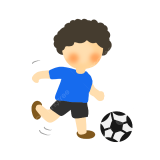
El domingo 


Estudiante 2
- Click here to reveal image
-
Allison Edwin Rachel El viernes 

El sábado 

El domingo 



Preparación comunicativa 4: Los memes
Paso 1. ¡Los memes están en todos lugares! En grupos pequeños, leen los memes y discuten:
- ¿Qué significan?
- ¿Son cómicos los memes?
- ¿Cuál es el verbo en el pretérito?
Paso 2. En tu grupo, habla de lo siguiente:
- ¿Qué meme fue tu favorito? ¿Por qué?
- ¿Qué meme no te gustó? ¿Por qué?
Paso 3. Ahora, crea tu propia meme usando MemeGenerator, PowerPoint, Canvas, Adobe Express o un program de tu elección.
Incluye una foto y una oración en español usando el pretérito.
Sé listo para compartir tu meme con la clase.